






































































How Is a Missing Front Tooth Replaced?
Losing a front tooth is often seen first as an aesthetic problem because it immediately changes the smile. However, the front teeth are not only important for appearance. They help bite into food, contribute to the pronunciation of certain sounds, and support the lips.
A missing front tooth can be replaced with a dental implant, a conventional bridge, a resin-bonded Maryland bridge, or a removable partial denture. There is no single best option for everyone. The width of the gap, the condition of the neighbouring teeth, the amount of bone and gum tissue, the bite, the patient’s age, and their expectations all need to be considered together.
Treatment planning begins with a complete dental examination and any X-rays that are considered necessary. In the front of the mouth, treatment is about more than simply filling a gap. The replacement tooth also needs to match the colour, shape, gum level, and proportions of the neighbouring teeth as well as the overall smile line.
During the clinical and radiographic assessment, the dentist checks the bone level, the position of the roots next to the space, any signs of infection, and how biting forces are distributed. A temporary tooth can often be arranged so the patient does not have to remain without a visible front tooth while the definitive treatment is being prepared. This content is for general information and does not replace a diagnosis or a personalised treatment plan.
What Are the Main Causes of a Missing Front Tooth?
• Trauma: a fall, sports injury, road traffic accident, or direct blow can fracture a tooth, knock it completely out of its socket, or damage the root and surrounding bone. If a permanent tooth is completely knocked out, it is a dental emergency. The chance of saving the tooth decreases with time, so a dentist should be contacted immediately.
• Severe decay, failed restorations, and fractures: advanced tooth decay, a failing old restoration, a root fracture, or an infection that cannot be successfully treated may eventually make extraction necessary.
• Severe periodontitis: loss of the bone and supporting tissues around the teeth can make the front teeth increasingly mobile and may eventually lead to tooth loss.
• Congenitally missing teeth: one or more permanent teeth may never develop. A primary tooth may remain in place, a gap may be present naturally, or the surrounding teeth may erupt into uneven positions.
• Less common causes: an impacted tooth, a cyst, treatment of another lesion, or a developmental abnormality can also result in a missing front tooth.
• Oral health that needs to be stabilised first: identifying the reason for the missing tooth matters. Active infection or periodontal disease should be brought under control before a definitive restoration is placed. When a tooth is congenitally absent, coordinated treatment involving an orthodontist, paediatric dentist, oral surgeon, and restorative or prosthodontic specialist may be needed.
How Is a Missing Front Tooth Treated?
Treatment aims to recreate a natural-looking tooth while restoring function, speech, and a balanced bite. The dentist assesses the available space and gum tissues using photographs, conventional impressions or an intraoral scan, panoramic X-rays, and, when needed, three-dimensional imaging. Whether the neighbouring teeth are untouched, already crowned, or heavily restored has a major influence on the choice of treatment. If there is not enough bone for an implant, bone augmentation may be considered. In patients whose facial growth is not yet complete, a temporary and conservative solution is generally preferred to placing a definitive implant.
Dental Implants: A Long-Term, Natural-Looking Option
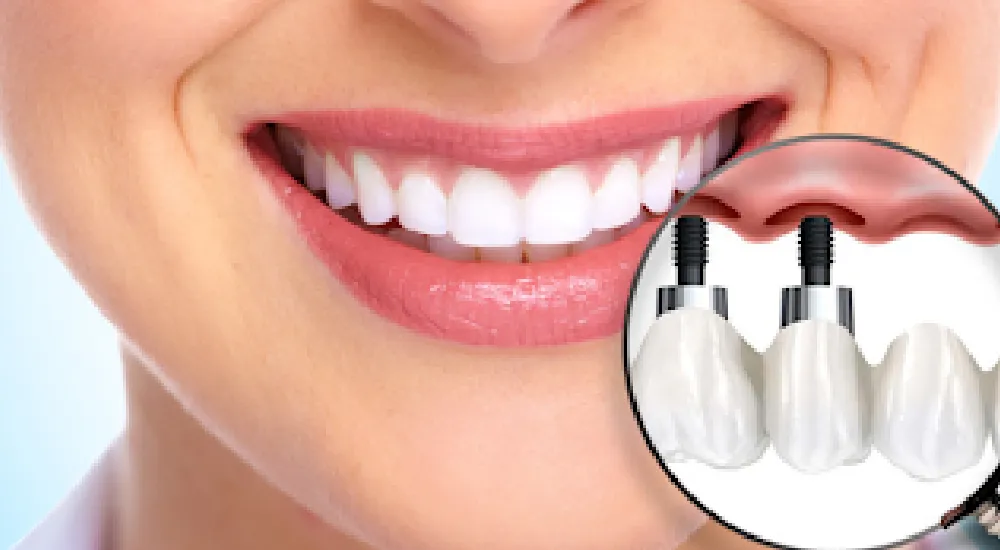
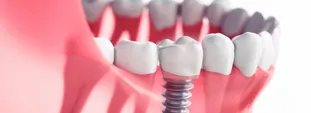
To replace a single missing tooth, a dental implant usually acts as an artificial root placed into the jawbone. After healing, a prosthetic abutment and a custom-made crown are attached to the implant. In suitable cases, a single-tooth implant can replace the missing tooth without cutting down the neighbouring teeth. In the aesthetic zone, success is not only about the implant integrating with the bone. The three-dimensional position of the implant, the thickness of the gum, preservation of the papillae, and the optical properties of the final crown all play an important role in achieving a natural result.
Even when an implant can be placed on the same day as the extraction, the definitive crown is not necessarily fitted immediately. Active infection, a very thin front wall of bone, or major tissue loss may make a staged approach more predictable. If the bone volume is insufficient, a bone graft or soft-tissue procedure may be recommended.
While the implant site is healing, appearance can often be maintained with a bonded temporary tooth, a tooth incorporated into a clear retainer, or a small removable denture. Smoking, uncontrolled medical conditions, active gum disease, and poor oral hygiene are considered when assessing implant risk. Like natural teeth, implants require thorough daily cleaning and regular professional follow-up.
Zirconia and Ceramic Dental Bridges
A fixed dental bridge uses one or more neighbouring teeth to support an artificial tooth that fills the gap. Zirconia or porcelain-fused-to-metal describes the material used to make the bridge; a zirconia crown by itself cannot replace a tooth that is completely missing. In the front of the mouth, the choice of material depends on factors such as colour, translucency, and how naturally the restoration blends with the gums. Fixed bridges may be considered for people who prefer not to have surgery, cannot receive an implant, or already have large restorations on the neighbouring teeth.
With a conventional bridge, the supporting teeth usually need to be prepared and reduced. This is irreversible, so when the neighbouring teeth are completely healthy, the advantages and limitations should be discussed carefully. If those teeth already need crowns, however, a bridge may address several restorative needs within the same treatment plan. After an impression or digital scan, a temporary bridge can be fitted. The final bridge is then tried in so that shape, shade, and bite can be checked before it is cemented. Cleaning underneath the replacement tooth with bridge floss or an interdental brush is essential for protecting the supporting teeth and gums.
Maryland Bridges: Replacing a Front Tooth with Minimal Preparation
A Maryland bridge, also called a resin-bonded or adhesive bridge, consists of an artificial tooth attached to a thin wing that is bonded to the back surface of a neighbouring tooth. In many cases, no cutting of the supporting tooth is required, or only minimal preparation is needed. This can make it a conservative option when the adjacent teeth are intact, particularly in young adults, in selected cases of congenitally missing teeth, or while waiting for future implant treatment. The bridge is fixed in place and is not removed by the patient. Its design also needs to prevent the wing from affecting the appearance of the supporting tooth.
A Maryland bridge is not suitable for every type of bite. A deep bite, bruxism, excessive force on the bonded wing, limited enamel surface, or large restorations on the supporting tooth can reduce bond reliability. The most common complication is debonding. In favourable situations, the bridge can often be cleaned and bonded again. A Maryland bridge can provide an excellent result for a single missing front tooth, but it is generally less suitable for wider spaces or areas exposed to heavy forces. The decision therefore depends on the supporting tooth and the patient’s bite.
Removable Partial Dentures
A removable partial denture can carry an artificial front tooth and can be inserted and removed by the patient. It does not require surgery, can often be made relatively quickly, and can replace several teeth at the same time. It may be used as a temporary solution before definitive treatment, while a younger patient is still growing, or when an implant or fixed bridge is not appropriate. Making a removable denture usually involves an impression, bite registration, and an aesthetic try-in to check lip support and speech.
A removable denture may feel less natural than an implant or fixed bridge. During the first few days, the patient may notice bulkiness, increased saliva, or a slight change in the way some sounds are pronounced. Adaptation is usually gradual. The denture should be cleaned after meals and, unless the dentist advises otherwise, removed at night. It should not be exposed to very hot water. If growth, tooth movement, or changes in the gums affect the fit, the denture needs to be checked and may eventually need to be replaced. A small temporary denture used to replace an incisor should be stored in a protective case to reduce the risk of loss or fracture.
A Front-Tooth Implant and Its Aesthetic Advantages
One of the main advantages of a front-tooth implant is that it can replace the missing tooth without relying on the adjacent teeth. When positioned correctly, it supports an independent crown and avoids reducing healthy neighbouring teeth. It also transfers functional forces to the bone in the area where the natural root is no longer present. Implant treatment in the aesthetic zone, however, requires particularly precise planning. An implant positioned too far forward, too far back, or at an unfavourable angle can result in a crown that looks too long, asymmetric, or poorly integrated with the gum line. Surgery should therefore be planned according to the intended shape and position of the final tooth.
A natural result depends on more than simply choosing a white crown. The width of the matching front tooth, the level of the incisal edge, surface texture, contact points, and symmetry of the gum contour are also assessed. If a large amount of gum is visible when smiling, soft-tissue management may sometimes be needed. A temporary crown can help shape the gum before the final restoration is made. The definitive crown is often ceramic, with shade selection carried out under suitable lighting. Long-term appearance also depends on healthy gums, daily cleaning around the implant, and regular follow-up visits.
Missing Front Tooth: Dental Implant or Zirconia Bridge?
The choice between an implant and a zirconia bridge depends on the condition of the neighbouring teeth, the available bone, whether surgery is suitable, the treatment timeline, and any additional restorative needs. The main differences are summarised below.
|
Criterion |
Dental implant |
Zirconia / ceramic bridge |
|
Neighbouring teeth |
Can replace the missing tooth without reducing healthy adjacent teeth. |
Usually requires preparation of the supporting teeth; may be a logical option when they already have large restorations or need crowns. |
|
Surgery and bone volume |
Requires implant surgery and adequate bone volume; bone grafting may sometimes be needed. |
Does not require implant placement and may be chosen when surgery is not desired or an implant is unsuitable. |
|
Treatment time |
Often takes longer because healing is required; the timeline may increase if grafting is necessary. |
Usually faster, depending on the condition of the supporting teeth and the laboratory stages. |
|
Long-term dependence |
An independent restoration that requires ongoing care of the implant and peri-implant tissues. |
Long-term success depends in part on the continued health and maintenance of the supporting teeth. |
|
Aesthetic material |
The implant crown can be made from ceramic or zirconia. |
The bridge can also be made with aesthetic materials such as ceramic or zirconia. |
Zirconia and implants are not two directly comparable treatments. The implant replaces the missing tooth root, while zirconia is a material that can be used to make the crown on an implant or a fixed bridge. The bite, bruxism, how much gum is visible when smiling, oral hygiene habits, and ease of long-term cleaning should also be considered before deciding.
What Happens If a Missing Front Tooth Is Not Replaced?
The changes do not occur at the same rate in everyone, but leaving a front-tooth space empty for a long time can allow neighbouring teeth to tilt or drift into the gap. The opposing tooth may also move further into the empty space. These changes can alter the bite, reduce the room available for a future implant or bridge, and sometimes make orthodontic correction necessary before replacement. Air leakage during speech, difficulty biting into food, and dissatisfaction with the smile can also affect daily life.
When the natural root is no longer present, the bone in the area can gradually lose volume. In the front of the mouth, where the bone and gum tissues are often relatively thin, this resorption can make a future implant more difficult to blend naturally with the surrounding tissues, although the degree of change varies between patients. When a tooth has been missing since birth, orthodontic treatment may be used either to close the space or to create and maintain the ideal amount of space for a replacement tooth. If definitive treatment needs to be delayed, early assessment is still worthwhile. A temporary tooth, space maintainer, or clear retainer may help maintain appearance and preserve the space, while active infection or gum disease should be treated first.
Frequently Asked Questions About Missing Front-Tooth Treatment
What Is the Best Treatment for One Missing Front Tooth?
No single treatment is best for every patient. In an adult whose growth is complete, with healthy neighbouring teeth and enough bone, a dental implant can be an excellent option. If the adjacent teeth already need crowns, a conventional bridge may make more sense. When the neighbouring teeth are intact and the bite is suitable, a Maryland bridge can offer a more conservative alternative. During growth, or when definitive treatment needs to be delayed, a temporary removable denture may be used. The final decision depends on the clinical examination, X-rays, gum condition, and bite.
Will I Be Left Without a Tooth While a Front Implant Heals?
Usually not. Because the front of the mouth is highly visible, a temporary tooth can generally be planned during treatment. If the implant has good initial stability and the bone and gum conditions are favourable, a fixed temporary crown can sometimes be fitted on the same day, while keeping it protected from heavy biting forces. When immediate provisionalisation is not appropriate, alternatives include a bonded Maryland-style temporary tooth, a tooth incorporated into a clear retainer, or a small removable denture. The temporary option is selected so that it does not place pressure on the surgical site or interfere with healing.
How Long Does It Take to Make a Front Dental Bridge?
The timeline depends on the type of bridge, the condition of the supporting teeth, and the laboratory work required. For a conventional bridge, treatment usually includes the examination, tooth preparation, an impression or digital scan, a temporary bridge, try-in appointments, and final cementation. In many cases, this takes a few appointments spread over approximately one to several weeks. Root canal treatment, gum treatment, or other restorative work can extend the timeline. Although preparation is more limited with a Maryland bridge, several visits may still be needed to confirm the shade and bite.
Is There an Age Limit for Replacing a Missing Front Tooth?
There is no single upper age limit for a dental bridge or removable denture. The decision depends on general health, oral hygiene, the supporting teeth, and the condition of the tissues. For implants, the key issue is not chronological age but whether facial and jaw growth has finished. An implant placed while a young person is still growing does not move in the same way as natural teeth and may later appear shorter or sit at a different level. For this reason, implant placement is generally postponed in children and adolescents, while a resin-bonded bridge, temporary denture, or orthodontic solution is used to manage the space in the meantime.
Can a Dental Implant Be Used for a Congenitally Missing Front Tooth?
Yes. Once growth is complete, an implant may be considered if there is enough space and bone. In areas where a tooth never developed, the bony ridge may be narrow and the roots of the neighbouring teeth may be too close together. Orthodontic treatment may therefore be needed to open the space or make the roots more parallel before implant placement, and bone or gum augmentation may also be discussed. In other situations, orthodontic space closure or a Maryland bridge may be a better option. The treatment plan is often developed jointly by the orthodontist, surgeon, and restorative or prosthodontic team.
In conclusion, replacing a missing front tooth should take into account not only the smile but also speech, function, and the balance of the entire bite. Dental implants, ceramic or zirconia bridges, Maryland bridges, and removable partial dentures each suit different situations. Before choosing a treatment, the reason for the missing tooth, the available bone and gum tissue, the health of the neighbouring teeth, the patient’s age, and the bite all need to be assessed. Early consultation can help preserve the tissues and the available space, and an appropriate temporary tooth can usually maintain appearance while the definitive treatment is being planned.