







































































Which Specialist Should You See for Braces? Orthodontic Treatment Guide
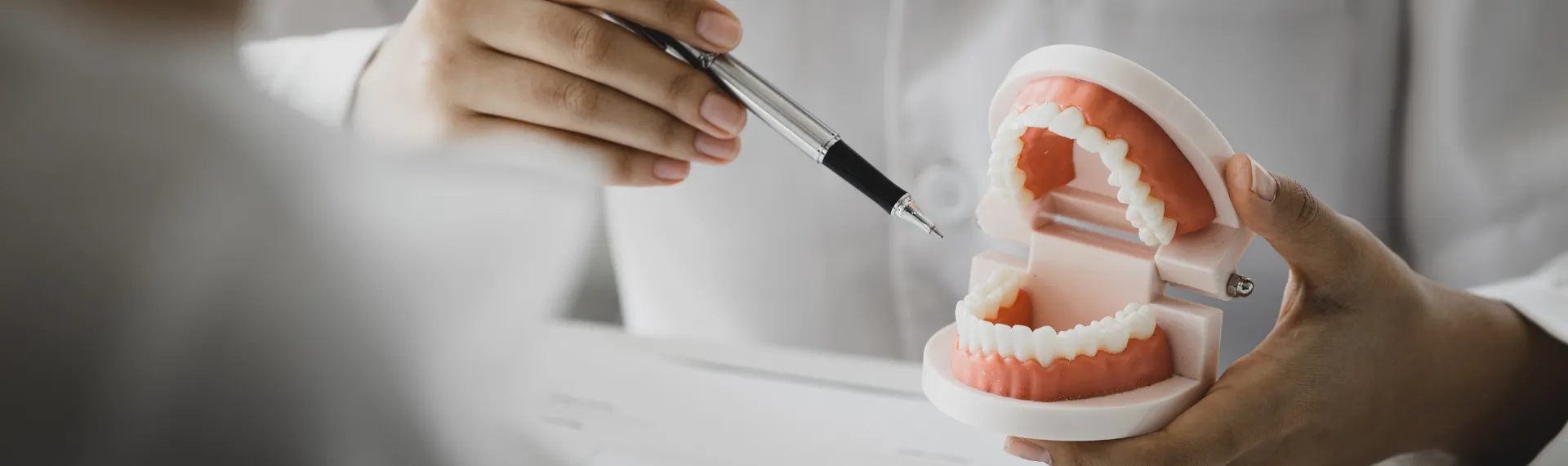
If you are considering braces, the specialist to see is an orthodontist. Orthodontics is the dental specialty that diagnoses and treats tooth crowding, spacing, and problems in the relationship between the upper and lower arches. Whether the planned treatment involves metal or ceramic braces, clear aligners, or another orthodontic appliance, the orthodontist carries out the assessment and determines whether treatment is appropriate.
Starting orthodontic treatment is not based only on how straight the front teeth look. Gum health, cavities, existing fillings and crowns, missing teeth, jaw relationships, oral hygiene, and any necessary radiographs are also considered. Active decay or uncontrolled gum disease may need treatment before braces are fitted so that orthodontic movement begins in a healthy oral environment.
In private dental clinics, patients can often book directly with orthodontics. In Turkish public hospitals, oral health centres, and dental schools, the pathway can vary: some facilities require an initial general dental consultation or internal referral before an orthodontic appointment. Patients using the Turkish public system may therefore need to check MHRS availability and the rules of the specific institution.
Which Department Should You Visit for Braces?
For fixed braces, clear aligners, or correction of a bite problem, the relevant department is orthodontics. The orthodontist examines both dental arches and how the upper and lower jaws meet, not just the teeth that look crooked. Crowding, wide spaces, protruding upper incisors, an underbite, open bite, deep bite, or crossbite can all be reasons for an orthodontic assessment.
A general dentist may refer a patient to orthodontics if an alignment or bite problem is identified. Where direct specialist booking is available, a separate general dental appointment is not always required first. The key point is that diagnosis and the plan for moving the teeth are established and monitored by the professional responsible for the orthodontic treatment.
Orthodontics: The Dental Specialty for Braces
An orthodontist is a dentist who has completed recognised specialist training in orthodontics. The role is not simply to bond brackets to teeth. The orthodontist plans the direction and magnitude of orthodontic forces, considers jaw growth, root position, and bite relationships, and follows treatment through to the retention phase.
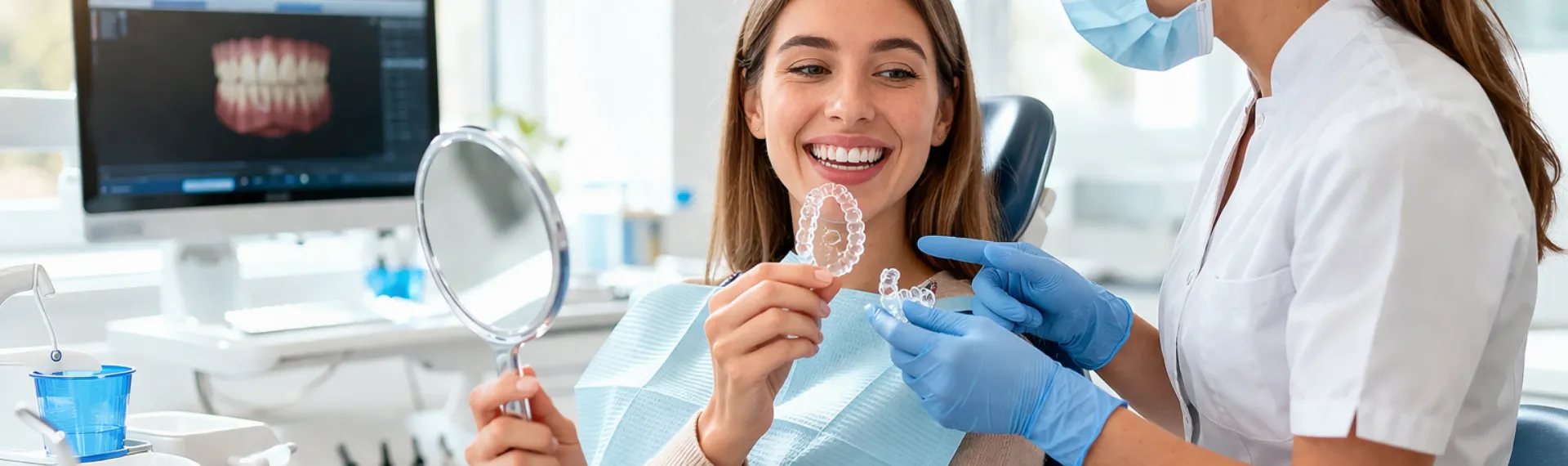
Depending on the problem, treatment may involve metal braces, ceramic braces, clear aligners, removable appliances, or growth-modifying appliances in selected children and adolescents. There is no single appliance that is best for every patient.
|
Situation |
Relevant Department |
What Is Usually Assessed |
|
Crowding, spacing, or bite problem |
Orthodontics |
Tooth alignment, occlusion, and jaw relationship |
|
Active decay or need for restorative care |
General / restorative dentistry |
Treatment of decay before orthodontics |
|
Bleeding gums or periodontal disease |
Periodontology |
Gum and bone support before tooth movement |
|
Impacted tooth or surgical need |
Oral and maxillofacial surgery |
Position of the impacted tooth and surgical planning |
When Should You See an Orthodontist?
You do not need to wait until crowding becomes severe. In children, some problems can be recognised while the jaws are still growing and may need monitoring or treatment at the appropriate stage. In adults, age alone is not a contraindication; the health of the teeth, gums, and supporting bone is usually more important.
-
Crowded teeth, obvious lack of space, or large gaps.
-
Upper incisors that project far forward, an underbite, or a marked discrepancy between the jaws.
-
Open bite, crossbite, or a very deep bite.
-
Early loss of a baby tooth, a permanent tooth that does not erupt where expected, or a suspected impacted tooth.
-
Unbalanced tooth contacts, increased risk of trauma to protruding incisors, or a significant aesthetic concern.
-
Teeth moving again after previous orthodontic treatment or a problem with a retainer.
An early consultation in a child does not necessarily mean braces will be fitted immediately. Growth and tooth eruption may simply be monitored. In adults, decay and active gum disease may need to be stabilised before treatment begins.
What Happens at the First Orthodontic Consultation?
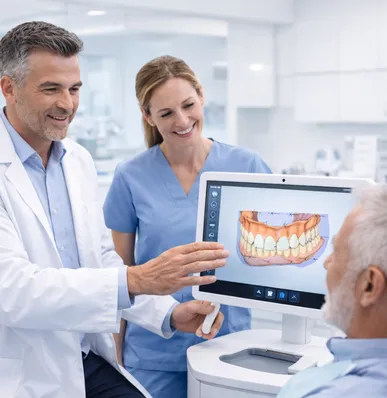
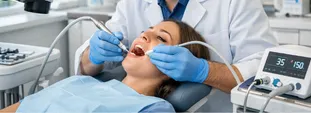
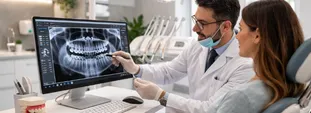
The first consultation is primarily for diagnosis and planning, not necessarily for fitting braces on the same day. The orthodontist asks about the patient's concerns, aesthetic and functional goals, dental history, and relevant medical information, then examines tooth alignment, bite, facial profile, gums, and oral hygiene.
-
Intra-oral and facial photographs.
-
A panoramic X-ray and, when indicated, a cephalometric radiograph to assess the teeth and jaws.
-
A 3D digital scan or, less commonly, conventional impressions of the dental arches.
-
Assessment of the bite and selected jaw movements.
-
Identification of decay, gum problems, missing teeth, or impacted teeth that may affect the orthodontic plan.
Not every patient needs every record. Once the assessment is complete, the orthodontist can explain whether treatment is necessary, what options are suitable, the approximate duration, and whether any dental treatment should be completed first. At Dentopol, the choice between fixed braces and clear aligners is based on a personalised assessment of alignment, bite, and overall oral health.
Frequently Asked Questions About Getting Braces
Can You Book Directly With Orthodontics for Braces?
Yes, in private clinics and facilities that allow direct specialist booking. In the Turkish public sector, some centres require an initial general dental visit or internal referral. If no orthodontic appointment appears on MHRS, an initial consultation department may be the required starting point.
Is There an Age Limit for Braces?
There is no single upper age limit. Adults can undergo orthodontic treatment when gum and bone support are healthy enough. In children, the starting point depends on the problem and stage of dental and skeletal development rather than one fixed age.
Are Braces Fitted at the First Orthodontic Appointment?
Usually not. The first visit is used to examine the teeth, bite, and jaws. Radiographs, photographs, or scans may be needed, and active decay or gum inflammation may have to be treated before the appliance is fitted.
Do You Have to See a General Dentist Before an Orthodontist?
Not always. In a private clinic, patients can often see an orthodontist directly. The orthodontist can then refer to a general dentist, periodontist, or other specialist if preliminary treatment is needed. Some public institutions may have their own referral rules.
Choosing the correct department is only one part of successful orthodontic care. The mouth should be healthy enough for treatment, and regular follow-up should be practical. An orthodontic consultation can determine whether braces, clear aligners, or another approach is suitable. This content is for general information and does not replace an individual clinical assessment.