

















































































Which Specialist Performs Dental Implant Treatment?
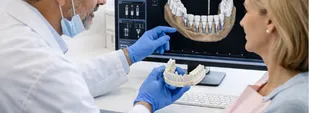
The surgical phase of implant treatment is commonly carried out by a clinician experienced in oral and maxillofacial surgery or periodontology. Implant care also includes clinical and radiographic diagnosis, three-dimensional planning, management of bone and gum tissues, the final crown or bridge, and long-term maintenance. At Dentopol, these stages are coordinated across the relevant disciplines.
Patients do not need to identify the correct department on their own before the first visit. The examination and imaging help establish the complexity of the case. A straightforward single implant with adequate bone is very different from full-arch rehabilitation, a site close to a nerve or sinus, major bone loss, uncontrolled periodontal disease, or a case requiring grafting.
Which Dental Specialties Are Involved in Implant Treatment?
|
Specialty |
Main Role in Implant Treatment |
Particularly Useful In |
|
Oral and maxillofacial surgery |
Implant placement and associated surgical procedures |
Advanced bone loss, sinus lift, grafting, high-risk anatomy, or extensive surgery |
|
Periodontology |
Assessment and management of gum, supporting bone, and peri-implant tissues; implant surgery in appropriate cases |
Periodontal disease, soft-tissue deficiency, aesthetic zones, and peri-implant maintenance |
|
Prosthodontics / restorative dentistry |
Design and placement of implant crowns, bridges, and supported prostheses |
Aesthetics, occlusion, full-mouth rehabilitation, and replacing several teeth |
|
Dentomaxillofacial radiology |
Radiographic interpretation using panoramic imaging or CBCT when indicated |
Assessment of bone volume, nerve canals, sinuses, and neighbouring structures |
Oral and maxillofacial surgery manages procedures involving the jaws and surrounding tissues. This expertise is especially useful when an implant is close to the sinus or inferior alveolar nerve, bone volume is limited, or additional surgical procedures are required.
Periodontology focuses on gum, supporting bone, and peri-implant tissues. Prosthodontics plans the visible restoration, including its shape, material, aesthetics, bite, and load. Radiology helps define available bone and nearby anatomy. Implant position should therefore support a stable, aesthetic, and cleanable final tooth.
Can a General Dentist Place Dental Implants?
Yes. A general dentist with appropriate education, training, and clinical experience can place implants in suitable cases. That does not mean every general dentist should manage every level of complexity. A single implant in favourable bone with limited anatomical risk is very different from a block graft, sinus lift, implant placement close to a nerve, or a full-arch fixed rehabilitation.
A course certificate or the phrase 'implant placement' on a profile is not enough to judge competence. Patients can ask about experience with similar cases, complication management, imaging and planning, and coordination with the future prosthesis. The key is a coherent plan, even when different clinicians perform different stages.
What Should You Consider When Choosing an Implant Dentist?
-
Training and clinical experience: ask about the clinician's formal qualifications and experience with cases similar to yours.
-
Comprehensive examination and imaging: gums, bone volume, bite, neighbouring teeth, medicines, and medical conditions should be assessed before a definitive plan is promised.
-
Coordination between surgery and prosthetics: implant position should be planned according to the final tooth's aesthetics, cleanability, and bite forces.
-
Discussion of alternatives: bridges or removable prostheses may also be appropriate; implant treatment should not be presented as the only possible option without comparison.
-
Written plan and implant traceability: treatment stages, possible additional surgery, implant system, and prosthetic plan should be documented, and implant details should be available to the patient.
-
Sterilisation and complication management: the clinic should have clear infection-control processes and a plan for nerve, sinus, infection, or implant-loss complications.
-
Follow-up and maintenance: suture checks, prosthetic appointments, occlusal adjustments, and long-term peri-implant care should be organised from the start.
Active periodontitis, heavy smoking, poorly controlled diabetes, major bone deficiency, or previous implant failure may require extra risk management. Gum disease or medical conditions may need stabilisation, and grafting may be considered before implant placement.
Frequently Asked Questions About Implant Specialists
Does Having an Oral Surgeon Improve the Success Rate?
Specialist surgical training can be valuable in cases involving major bone loss, sinus surgery, nerve proximity, or extensive procedures. A specialist title alone does not guarantee a specific success rate; outcomes also depend on case selection, implant position, tissue health, prosthetic design, smoking, systemic health, hygiene, and maintenance.
Who Makes the Porcelain or Zirconia Tooth After Implant Placement?
The final crown is often designed and fitted by a prosthodontist, restorative dentist, or another dentist experienced in implant restorations. The abutment, shade, shape, bite, and relationship to neighbouring teeth are assessed. Surgery and restoration may be handled by one clinician or a coordinated team.
Which Specialist Should You See for Severe Bone Loss?
Marked bone deficiency may be assessed by an oral and maxillofacial surgeon or periodontist. The need for grafting, guided bone regeneration, or sinus elevation depends on the location and extent of the defect, while the restorative plan should guide the future tooth position.
Are All Dentists Licensed and Certified to Place Implants?
Dentists are licensed to practise dentistry, but training and experience in implant surgery vary. Implantology is not a stand-alone specialist title in every country. Patients should consider recognised qualifications, relevant experience, equipment, case complexity, and appropriate referral when a case exceeds the clinician's experience.